The Complete Plumbing Timeline for New Construction: From Underground Lines to Final Fixtures
June 19, 2026 · 9 min read
Walk through a finished house and you will not see most of its plumbing. The line carrying waste out of the kitchen sink. The supply feeding the upstairs bath. The vent stack that keeps your drains from gurgling. All of it disappears behind drywall, under the slab, or out in the yard within a few weeks of going in. So the order we install it in is not busywork. A shortcut taken in week one can show up a year later as a leak, a sluggish drain, or a failed inspection, long after the homeowner has unpacked the last box.
We handled the full plumbing build on a new construction home right here in the Yadkinville area, start to finish, and it ran the way every code-compliant job runs: underground lines first, then rough-in, then inspection, then finish. Below is what actually happens at each stage, why the stage exists, and where new construction plumbing tends to go sideways. Building a custom home? Lining up a plumbing sub as a general contractor? Either way, knowing this sequence helps you tell a careful crew from a fast one.
Stage 1: Underground Water and Sewer Lines
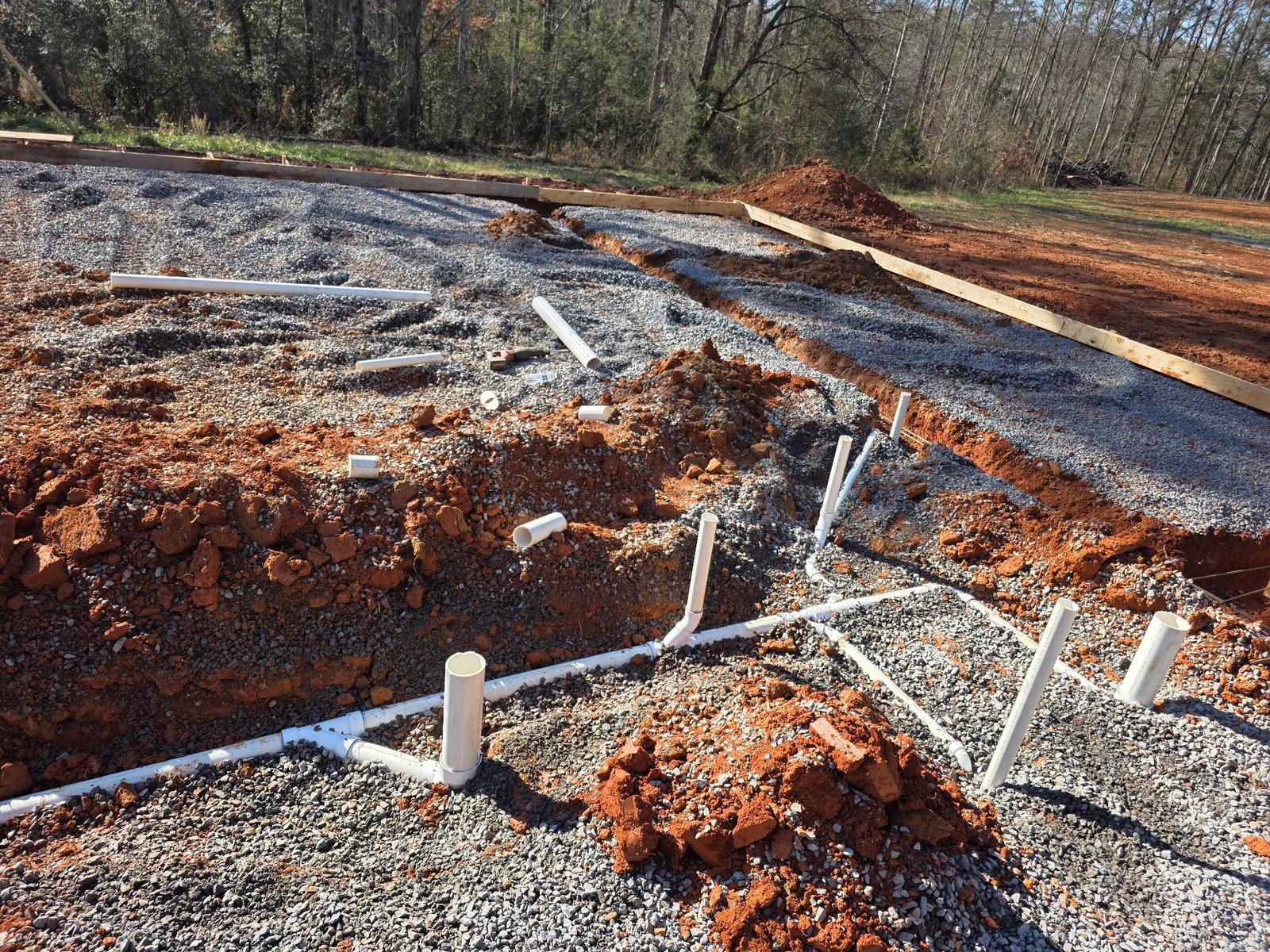
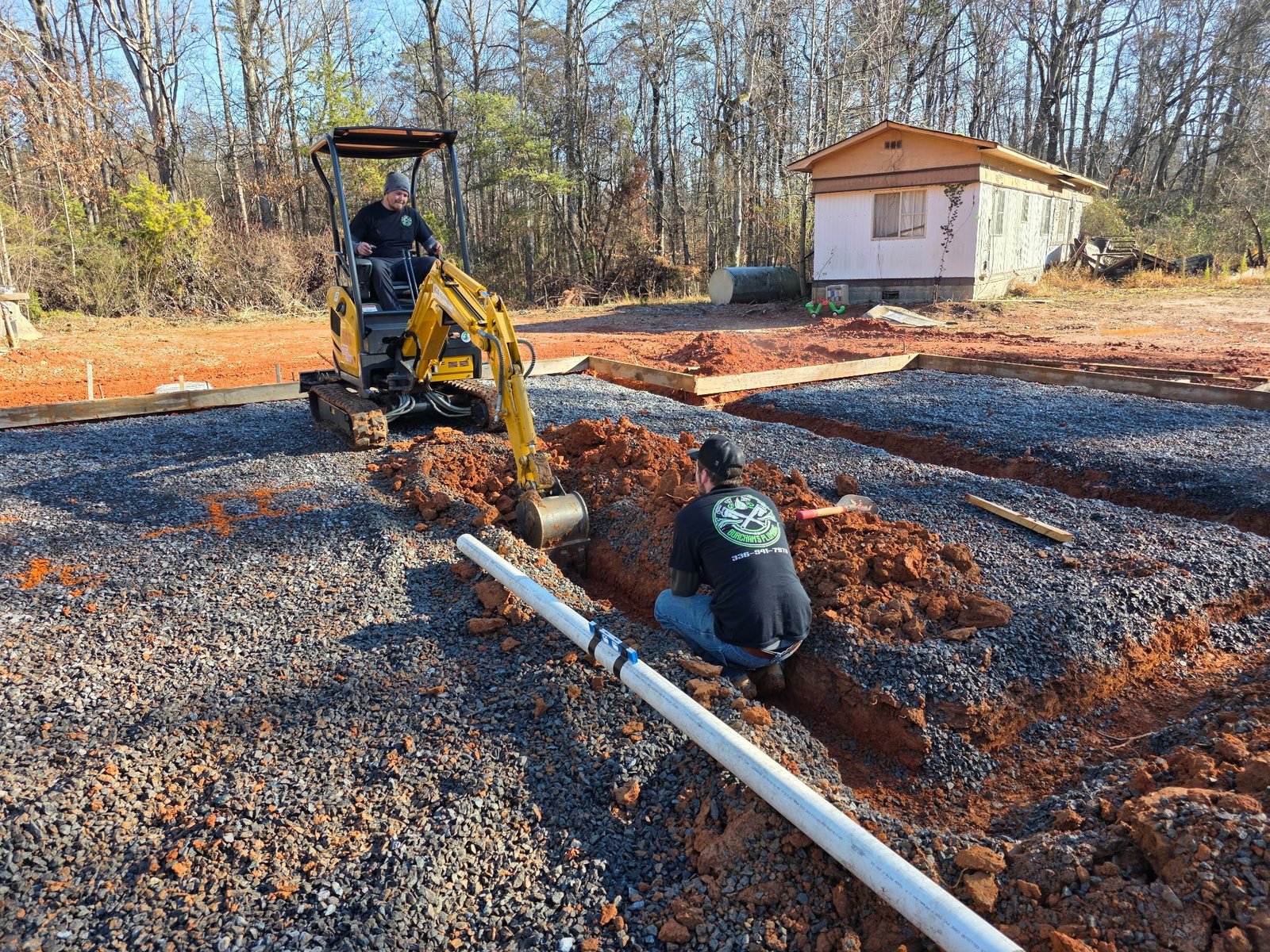
Before any wall stands up, and usually before the slab gets poured, the underground water supply line and the sewer line have to go in the ground. This part is trench work. We dig to the right depth for frost protection and code, set the pipe at a slope that lets waste move by gravity instead of pooling, then tie into the municipal main or a septic system.
Every drain, waste, and vent pipe down here gets measured against the home's real floor plan. Not a guess at where the kitchen might land. We work straight off the layout so each future fixture has a correctly sized, correctly sloped line waiting on it. Miss the slope by a fraction of a degree and you have bought yourself a kitchen sink that drains slow for the life of the house, buried under a slab nobody wants to jackhammer.
This is also when we set the below-grade fittings, cleanouts, and vent stubs that have to line up with framing that does not exist yet. On a build, plumbing is half pipe work and half coordination. The underground phase is the part that forgives the least.
Stage 2: Rough-In, the Skeleton of the System
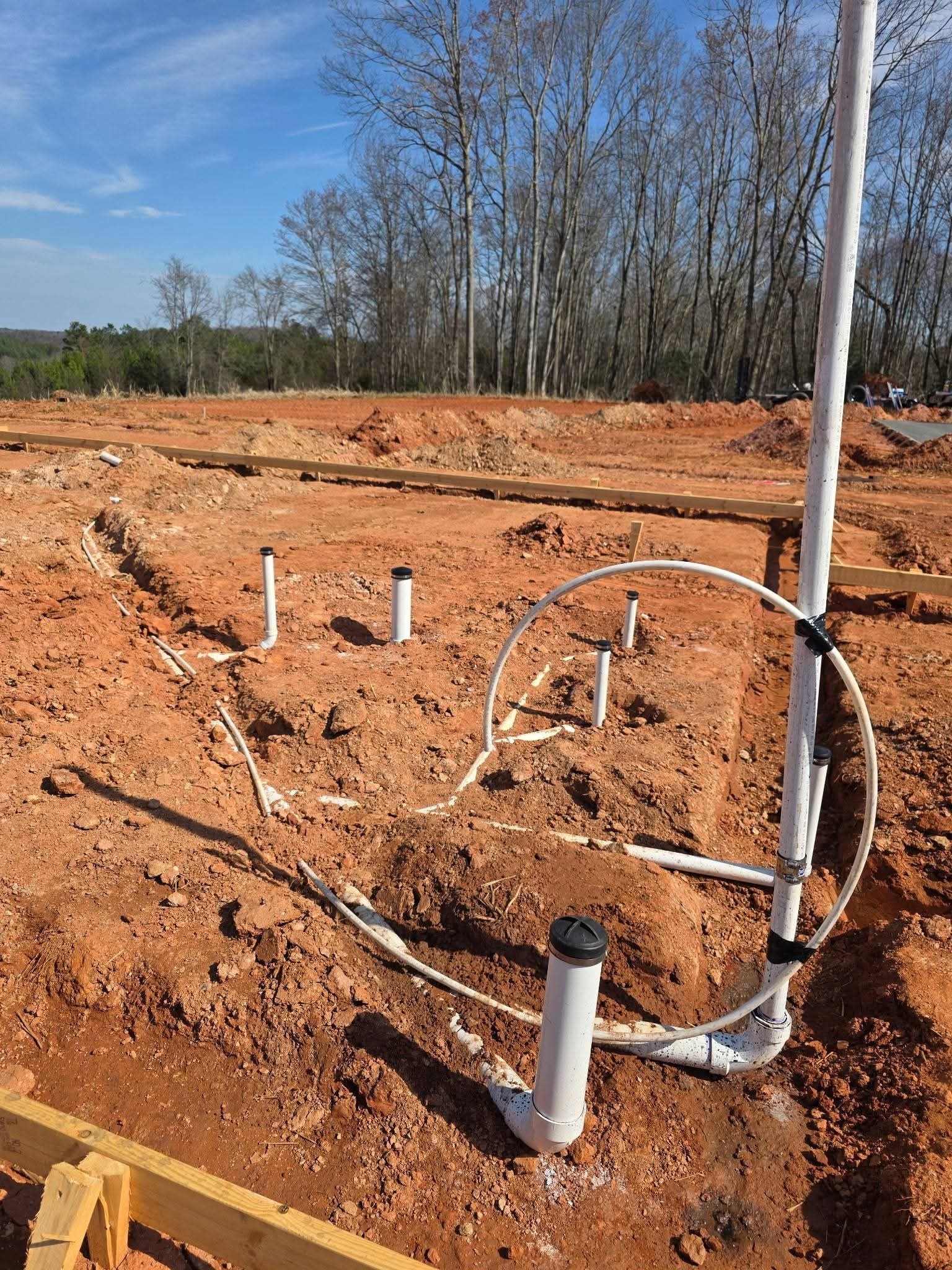
Framing goes up, and rough-in begins. Now we run water supply, drain lines, and vent piping through the walls and floors to every fixture spot in the house: sinks, toilets, showers, tubs, the washer hookup, the kitchen. Nothing connects to a real fixture yet. It is all stub-outs and capped lines, sitting there waiting on drywall and, eventually, the fixtures themselves.
Venting gets tied in correctly at this stage too, and venting is not some optional extra. Skip it or route it wrong and drains can siphon the water right out of the trap seals, which lets sewer gas drift up into the house. Here is the tricky part: a rough-in can look finished to an untrained eye and still have a vent that is missing or misrouted. You will not know until somebody catches a smell months down the road.
We test every connection for flow and check it against the fixture schedule before moving on. Catching a misplaced drain line now costs almost nothing. Catching it after the tile is set and the cabinets are hung? That is a different bill entirely.
Stage 3: The Rough-In Inspection Checkpoint
Once rough-in wraps, the local inspector goes through the whole system before anyone closes a wall. Do not treat this as a formality. It is the last time the plumbing is fully visible and still fixable without demolition. The inspector checks pipe sizing, slope, venting, support, and the pressure-test results against North Carolina plumbing code.
Passing here is a genuine milestone. It confirms that everything buried underground and hidden in the walls meets the standard that protects the homeowner for decades. We treat it as our own checkpoint, not just the inspector's. If something is off, this is the moment to make it right, while the fix still costs a fraction of what it would once the next phase covers it.
Stage 4: Finish Plumbing
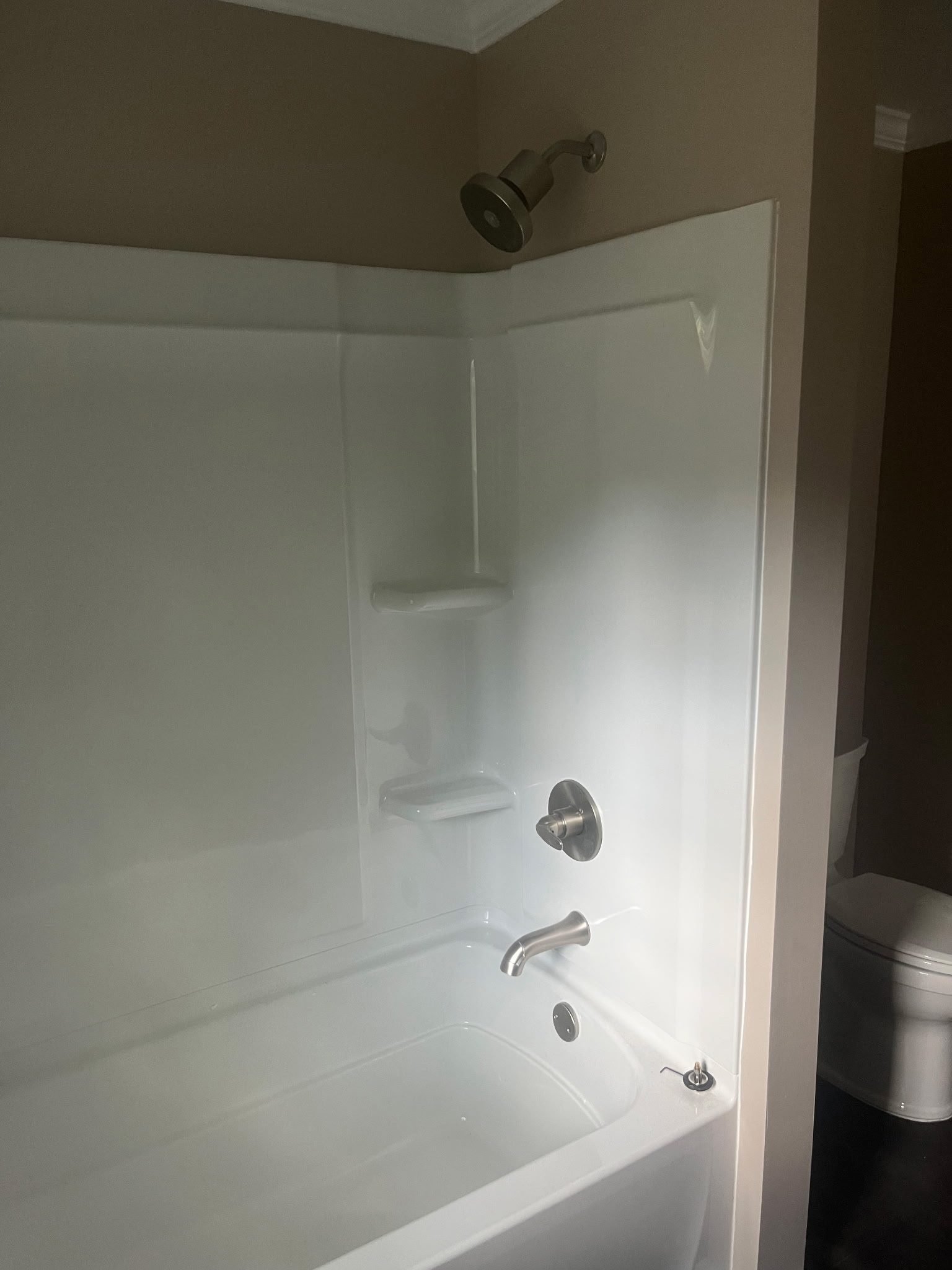
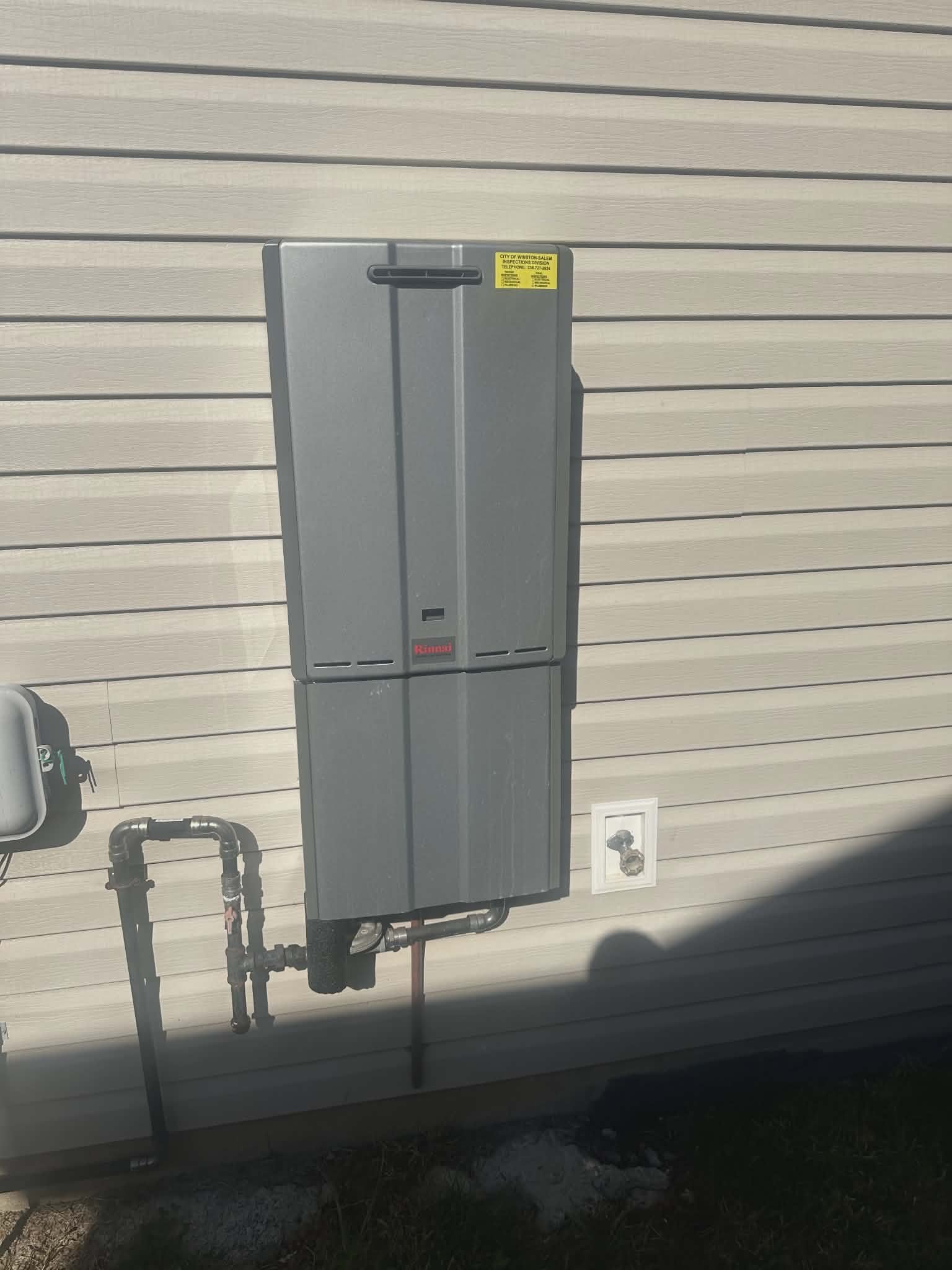
Drywall is up, the house is closing in on done, and finish plumbing brings out the parts people actually see and touch. We set the toilets, sinks, tubs, and showers. We connect faucets, install the water heater, and wire in the extras like a fridge water line or a laundry hookup.
Then everything gets checked, fixture by fixture, for leaks and proper operation before we call it done. Water runs through every line. Drains get tested. The water heater comes up to temperature and gets verified. This is also where the small stuff that shapes daily life gets dialed in: pressure balanced across fixtures, shutoff valves left where you can actually reach them, and nothing left behind to turn into a punch-list complaint two weeks after move-in.
Why the Order Matters
Every stage on this timeline exists to get checked before the next one buries it. Underground lines get inspected and tested before backfill. Rough-in gets inspected before insulation and drywall. Finish work gets tested before anyone turns a handle. Skip a step, or rush one to protect a schedule, and the cost of the fix does not creep up. It jumps. Sometimes that means cutting open a slab. Sometimes it means a finished wall comes back down.
At Burcham's Plumbing, we take real pride in the new construction work we do, big jobs and small, from the first underground line to the last fixture, across Yadkinville, Winston-Salem, and the wider Triad. The goal never changes: a system that is right the first time, on schedule, and built to outlast its warranty.
The mistake we usually find
We have opened up new builds where the underground drain line looked perfect on paper but went in a few degrees off in the trench. Nobody noticed until a kitchen or bathroom drain started crawling, not long after move-in.
How we fix it
We check slope and alignment in the trench itself, not just on the drawing, then pressure test before backfill. The line that is about to become permanently buried is the one we are most certain about.
FAQ
Common Questions
Got an idea?
Got a topic you'd like a pro to cover? Tell us and we'll write for you.
Send the question that has been bugging you. If it is plumbing, we have probably fixed it, and we will turn the answer into a post.
Suggest a topicNeed this fixed, not just diagnosed?
New Construction Plumbing from a crew that documents the work and stands behind it with a warranty.