5 New Construction Plumbing Mistakes We Catch Before the Drywall Goes Up
June 19, 2026 · 7 min read
Builders and GCs who bring us in partway through a project tend to want the same thing: a plumbing crew that catches problems before they get covered up, not after. Across enough new construction jobs around Yadkinville and the Triad, the same short list of mistakes keeps showing up. Almost every one traces back to moving fast through a phase that punishes speed. Here are five we see most, why each one matters, and what catching it early actually saves you.
1. Drain Lines Sloped Wrong by a Few Degrees
Drain lines run on gravity, so slope has to be close to exact. For most residential drain sizes that means a quarter inch of fall per foot of pipe. Too little slope and waste moves too slow, leaving solids behind. Too much, and the liquid races ahead of the solids and strands them in the pipe. Either way you get the same ending: a drain that performs badly inside the first year, all because of a measurement made before the slab was even poured. By then the fix means breaking concrete. A few careful minutes at rough-in is worth a small fortune later.
2. Vent Piping That Is Present but Not Actually Functional
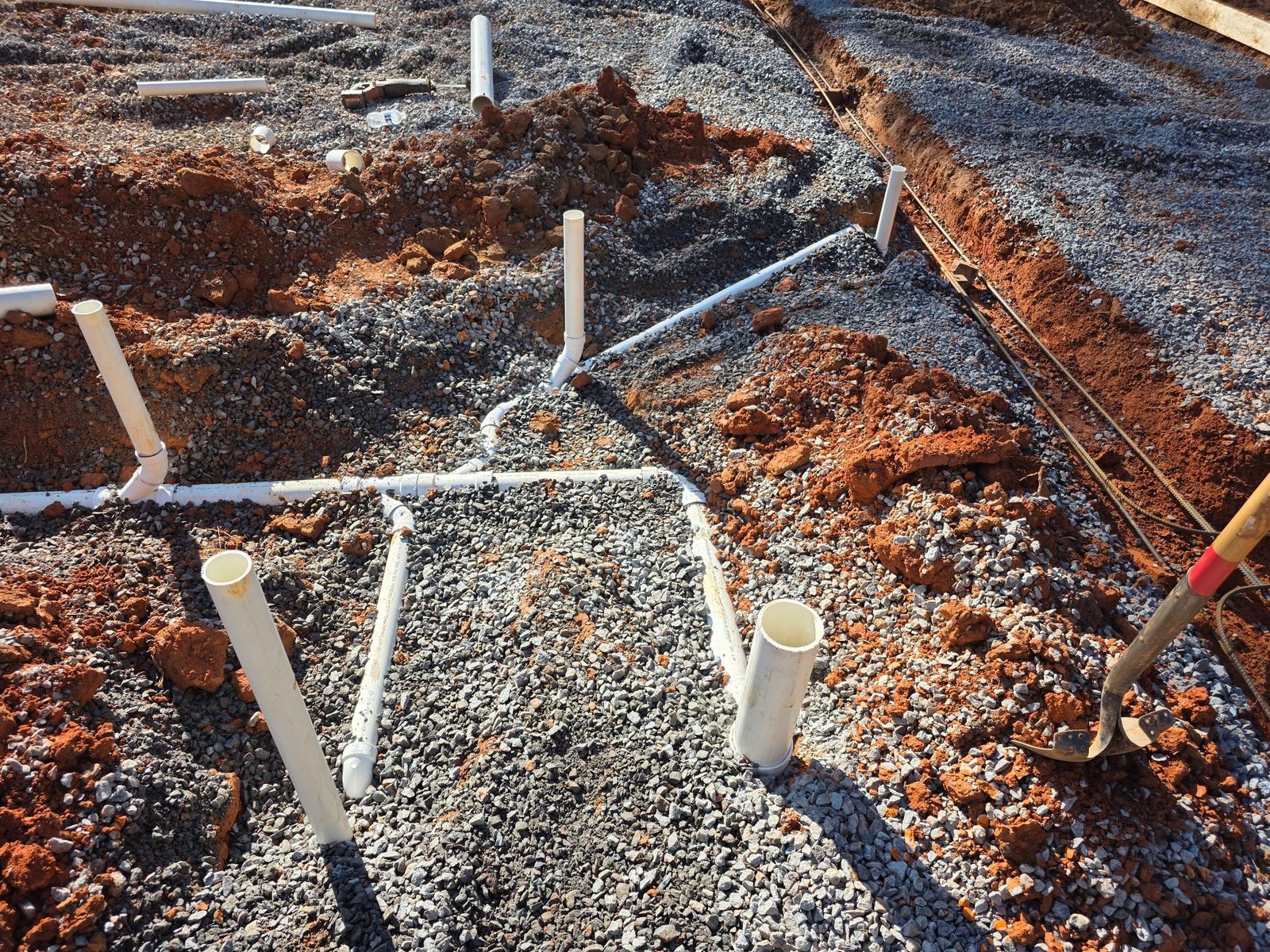
Every fixture needs a vent to keep its trap from siphoning dry. But a vent can exist and still fail at its one job if it is undersized, packed with too many tight turns, or tied in too far from the fixture it is protecting. This is one of the harder ones to spot with a casual look, because the pipe is right there. It is the routing and sizing that is wrong. It usually surfaces later as a sewer-gas smell or a gurgling drain that no amount of snaking fixes, because the problem was never a clog to begin with.
3. Fixture Stub-Outs That Do Not Match the Finished Layout
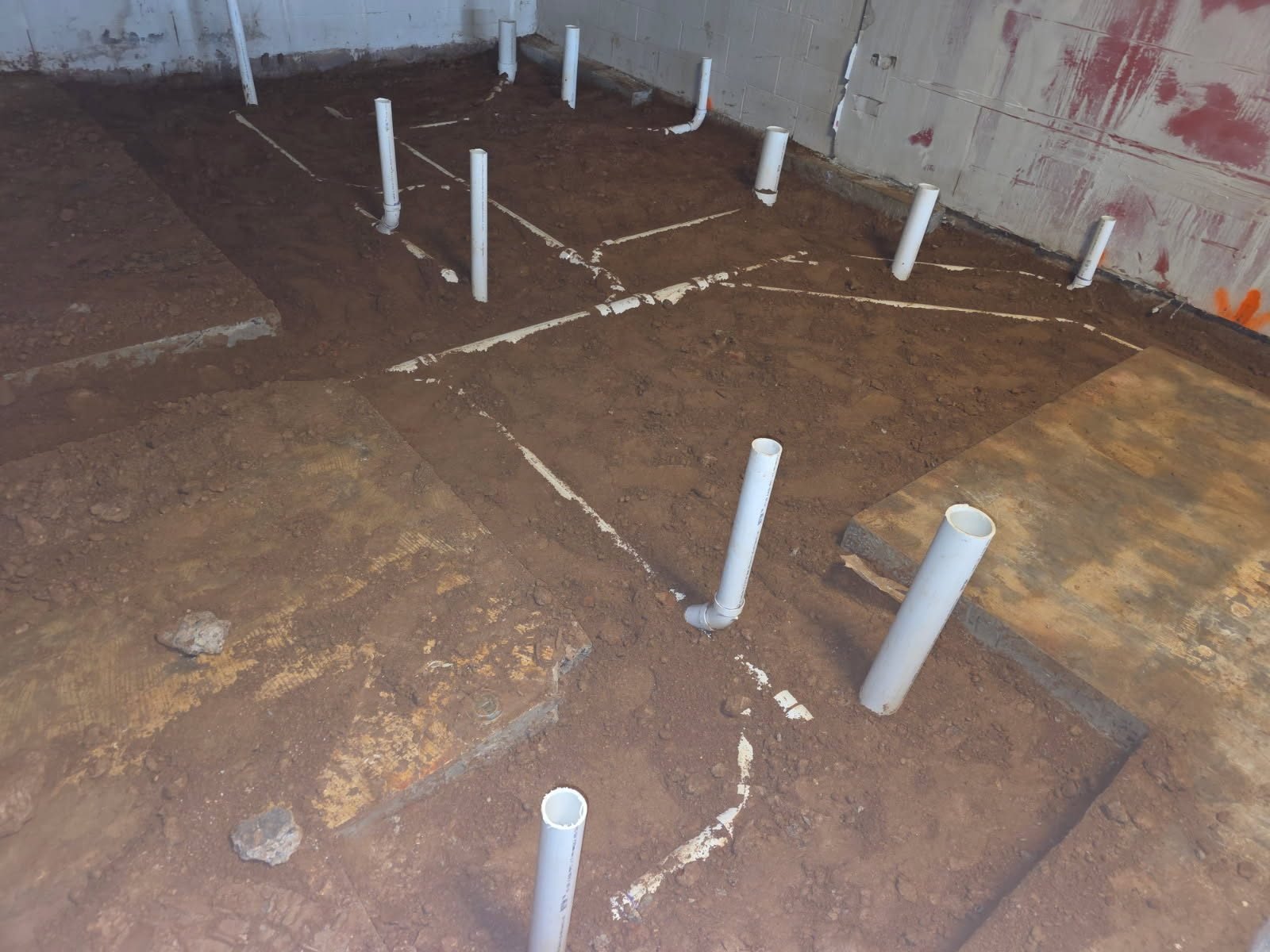
Rough-in happens before tile, cabinetry, and finish carpentry, which means it gets installed to a plan, not to what is physically in the room yet. We have found stub-outs placed for a vanity that got moved on a later set of drawings. A shower valve set at a height that does not match the tile surround that eventually went in. These are not plumbing failures in the usual sense. They are expensive coordination headaches that land right when a project is trying to push toward finish work.
4. Pressure Tests Skipped or Cut Short
A rough-in pressure test is supposed to hold for a set period with no drop, proving every joint in the system is sound. Cut it short, or skip it under schedule pressure, and the first real test those joints ever get is the homeowner's daily use. Months or years later. Walls closed, warranty clock already ticking. A leak that shows up then is not just a plumbing problem. It is a drywall problem, a flooring problem, sometimes a mold problem.
5. Underground Lines Connected Without Confirming Depth or Cleanouts
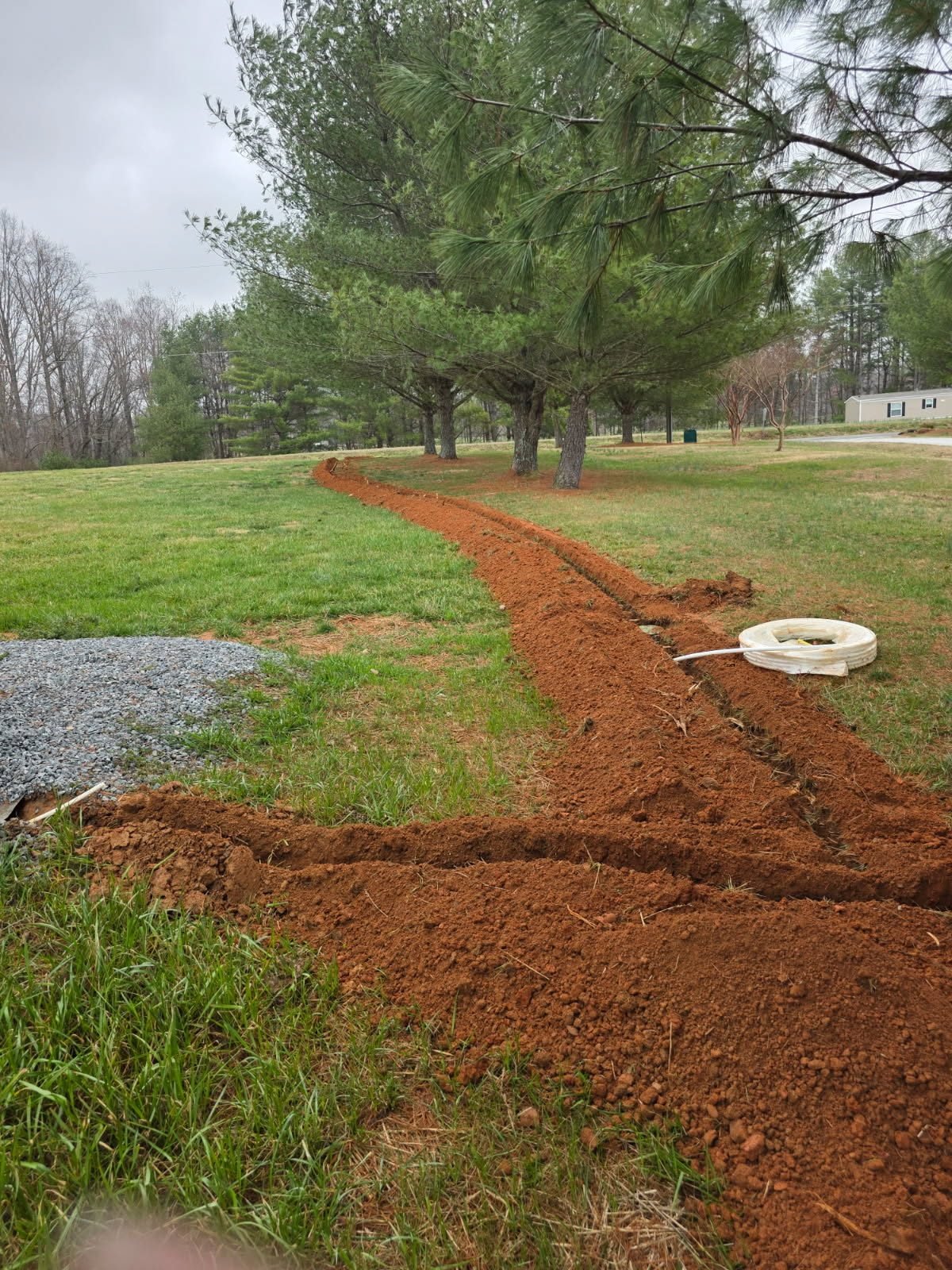
Underground water and sewer lines need to sit at a depth that shields them from frost and surface load, and sewer lines need cleanouts wherever code calls for future access. We have seen lines buried at uneven depth across a single run. Cleanouts left out entirely because the trench got backfilled before anyone double-checked the plan. Both are tough and pricey to correct once the yard is graded and landscaped. And a missing cleanout turns a routine drain service down the road into a dig.
The mistake we usually find
All five of these share one root: something that is technically installed but never got verified against the actual plan, the code requirement, or the pressure standard before the next phase of construction covered it up.
How we fix it
Our process bakes that verification into every stage. Slope checked in the trench. Vents traced fixture by fixture. Stub-outs confirmed against the latest drawings. Pressure tests held for the full required time. Builders get a rough-in that is actually correct, not just installed.
FAQ
Common Questions
Got an idea?
Got a topic you'd like a pro to cover? Tell us and we'll write for you.
Send the question that has been bugging you. If it is plumbing, we have probably fixed it, and we will turn the answer into a post.
Suggest a topicNeed this fixed, not just diagnosed?
New Construction Plumbing from a crew that documents the work and stands behind it with a warranty.