Signs Your Water Heater Is About to Fail (and What a Proper Replacement Looks Like)
June 19, 2026 · 8 min read
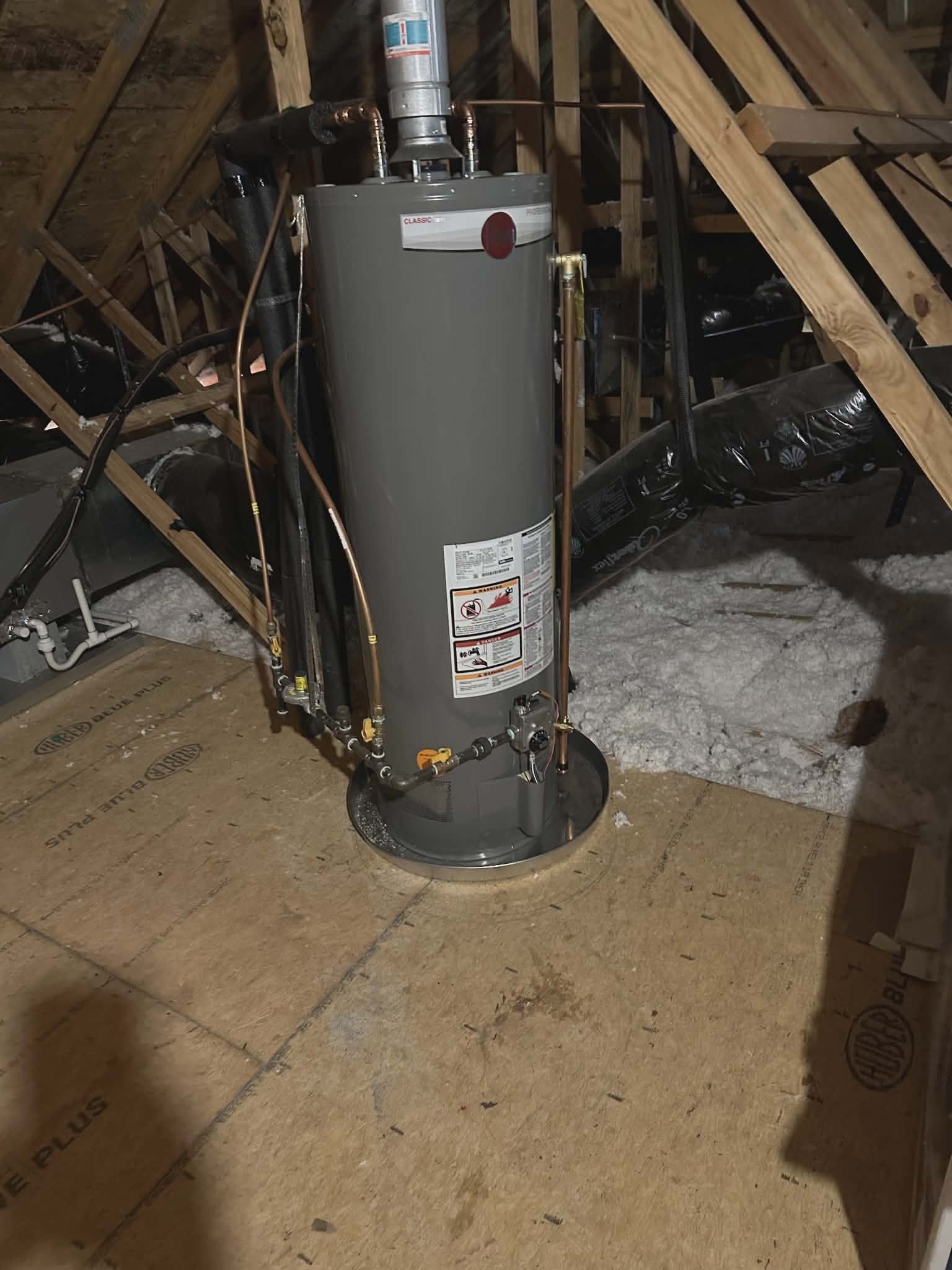
We put a new gas water heater in for a customer recently, after their old one started showing its age. Hot water is one of those things nobody thinks about until the morning it is not there. Which is the whole argument for replacing an aging water heater before it quits: you skip the scramble, and you skip the water damage that comes when a tank lets go while the house is empty.
If your water heater is pushing ten years or older, give this a few minutes. Knowing the warning signs, and knowing what a correct replacement actually involves, lets you plan on your schedule instead of the heater's. And the heater always seems to pick the first cold morning.
The Warning Signs Most People Miss
Most water heaters have a real shelf life. For a standard tank unit, figure 8 to 12 years, depending on water quality and how it was maintained. As they age they lose efficiency, push your utility bills up, and eventually spring leaks that ruin flooring and whatever you have got stored nearby.
Here is what is worth watching: water that takes longer to heat or runs out quicker than it used to. Rust-colored water from the hot taps. A tank that pops or rumbles, which is usually sediment hardening on the bottom. Moisture or rust creeping around the base. A pilot light or burner that will not stay lit. Any one of these on its own might be nothing. Stack a couple together, or see them on a unit already past ten years, and that is your cue to plan a replacement on your terms instead of the water heater's.
What We Check Before Touching the Old Unit
Before we pull an existing water heater, we look over the gas line, the water connections, and the venting to make sure all of it is sound and ready for the new install. This matters more than it sounds. A straight swap, where you disconnect the old unit and bolt the new one onto whatever was already there, can carry forward problems that had nothing to do with the heater: an undersized gas line, venting that was never code-correct, water lines that need attention no matter what tank sits on top.
What a Proper Installation Actually Includes
Once the new water heater is set, we connect the plumbing and gas, test every fitting, and confirm the whole system runs the way it is designed to before we call it done. That means checking the temperature setting, making sure it does not swing under load, and leaving the customer with reliable hot water from day one. Not a unit that technically works but limps along.
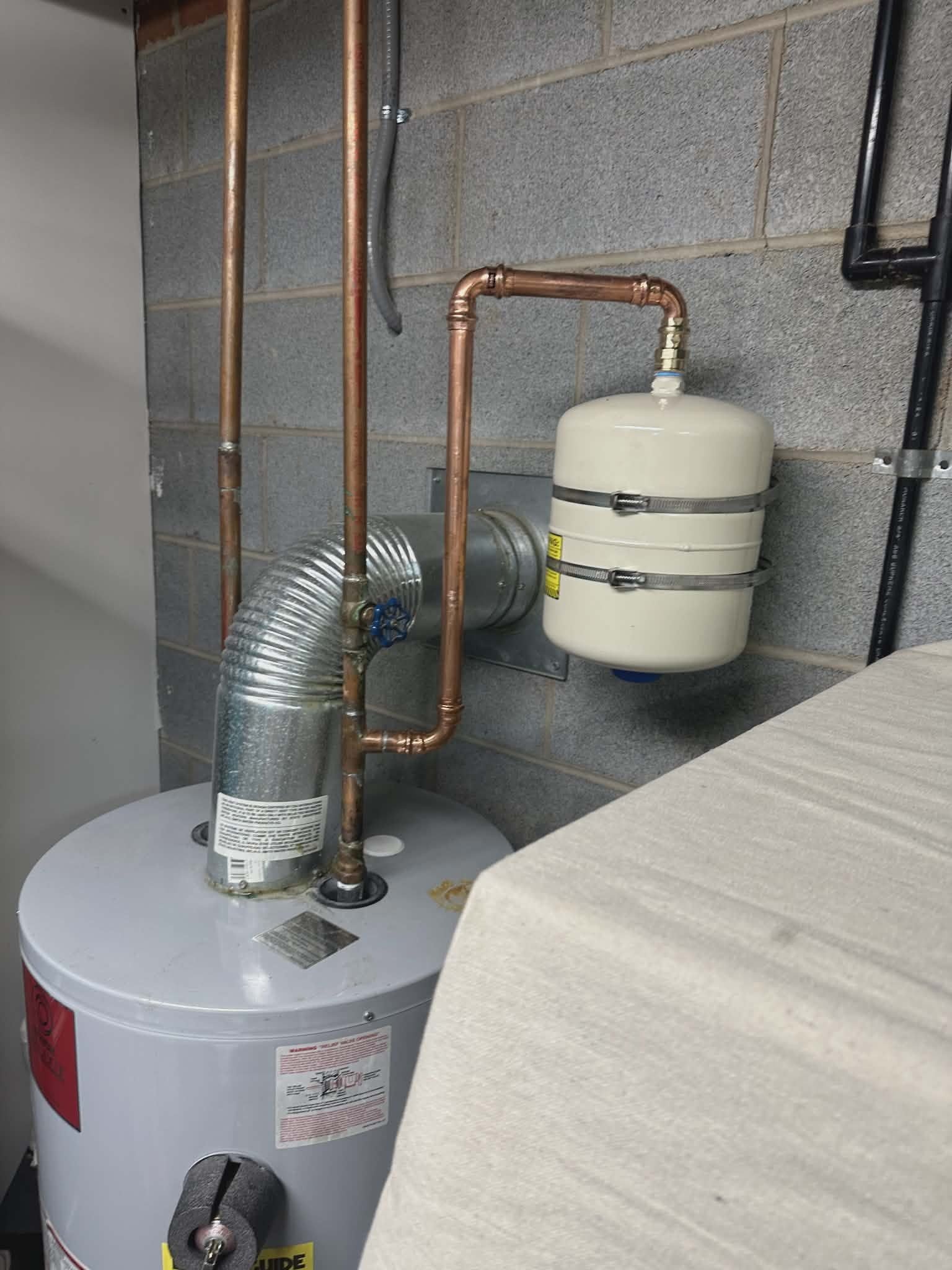
A correct install also means venting sized for the unit's BTU output, an expansion tank wherever code or the water system calls for one, and a permit pulled when the jurisdiction wants it. None of that is an upgrade you can shrug off. It is the line between an install that protects the home for the long haul and one that just gets the water hot again for now.
Tank vs. Tankless: Which Replacement Makes Sense
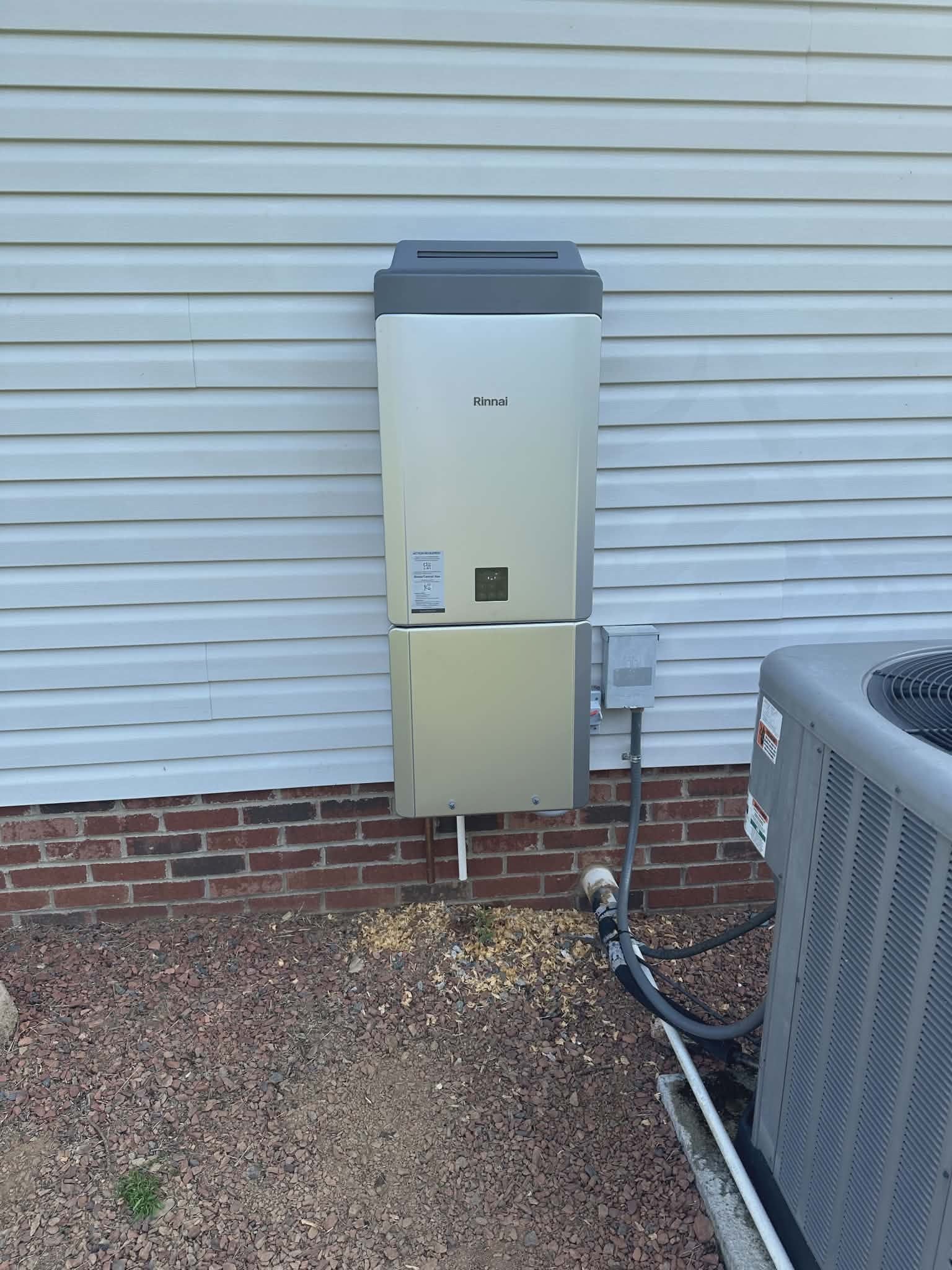
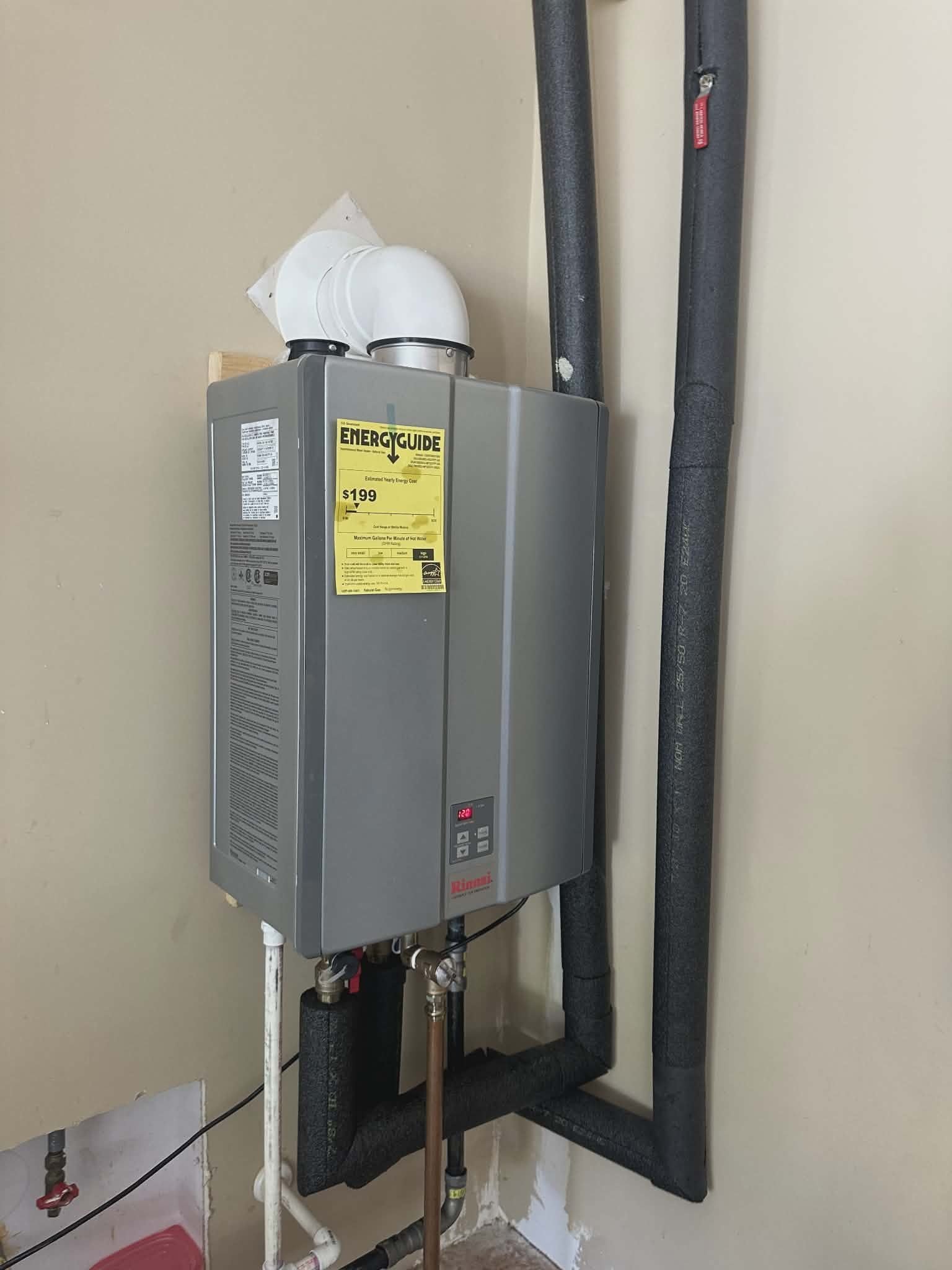
When a water heater needs replacing, it is a natural moment to ask whether a standard tank or a tankless unit fits better. A tank costs less up front and is simple to service, which is why it is still the right call for plenty of homes. A tankless unit costs more to install, but it heats on demand, never runs out, takes up less space, and often lasts longer. For a big household, or a home that has outgrown its current tank, that can pay off.
There is no single right answer here. It comes down to your hot water demand, your gas supply, your space, and your budget. We walk customers through the trade-offs straight, instead of steering everyone toward the pricier option, because the right water heater is just the one that fits the house and the people living in it.
When to Repair vs. When to Replace
Not every water heater problem calls for a full replacement. A dead thermocouple, a bad heating element, a faulty thermostat, those can often be repaired on a unit that is otherwise healthy and still within its years. The math changes once the tank itself is leaking, rather than a fitting, once you are past the 10 to 12 year mark, or once repeated repair bills start creeping toward the price of a new unit. If your water heater is struggling to keep up, making strange noises, or just getting old, it is worth an honest read on which side of that line you are on. Before it decides for you.
The mistake we usually find
We regularly find water heaters installed with no expansion tank, or vented in a way that was never quite right, because getting the swap done fast beat getting the connections done correctly.
How we fix it
Every replacement we do gets code-correct venting, an expansion tank sized for the system when one is needed, and a permit pulled where it is required. Same standard whether it is a same-day emergency swap or a planned replacement.
FAQ
Common Questions
Got an idea?
Got a topic you'd like a pro to cover? Tell us and we'll write for you.
Send the question that has been bugging you. If it is plumbing, we have probably fixed it, and we will turn the answer into a post.
Suggest a topicNeed this fixed, not just diagnosed?
Water Heater Services from a crew that documents the work and stands behind it with a warranty.