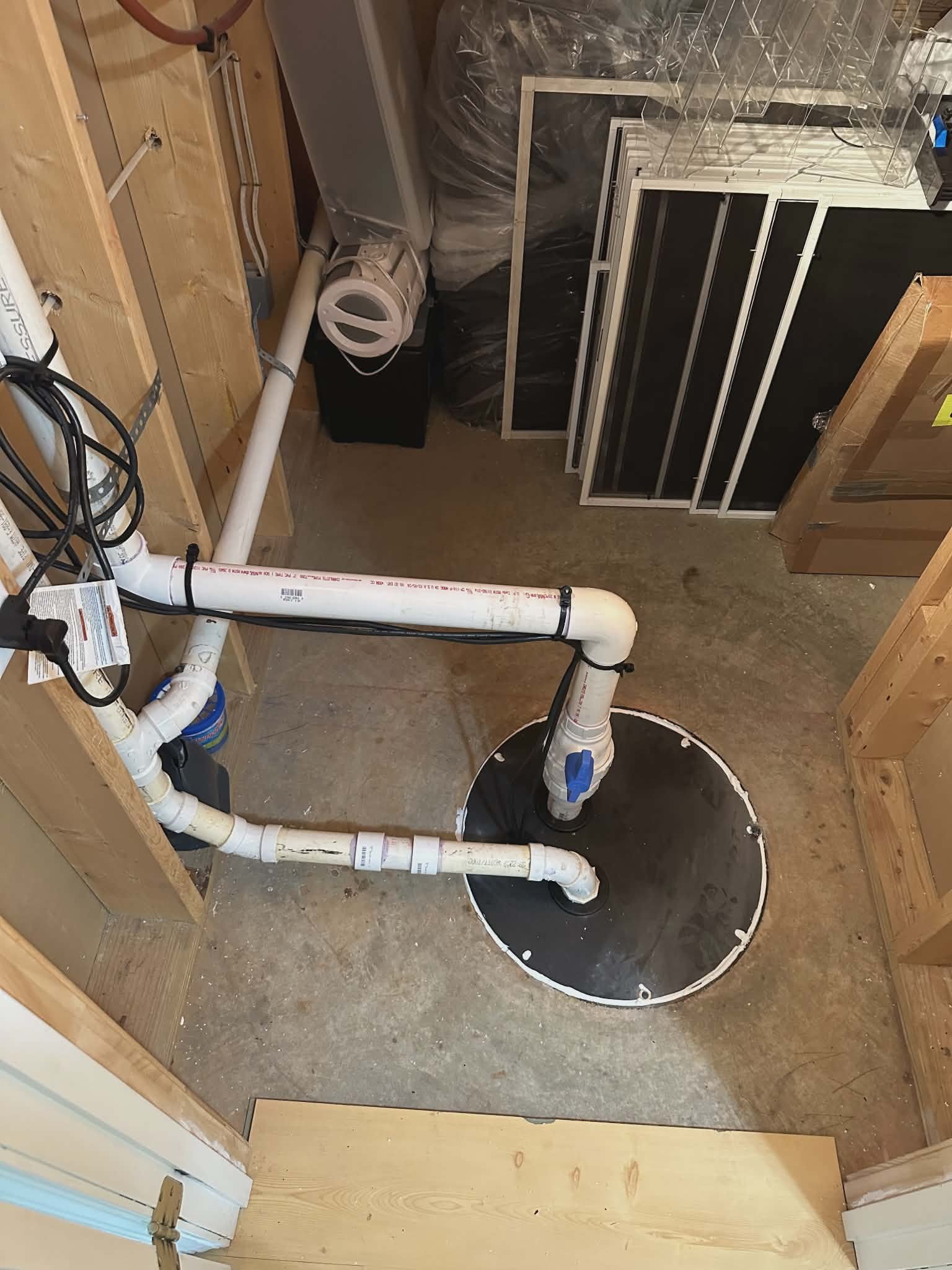
Sump Pump Installation: What Most Crawlspace Setups Get Wrong
June 19, 2026 · 7 min read
A sump pump is one of the best defenses a home has against groundwater, especially during heavy rain and storms. It is also one of the easiest systems to forget, because it sits in a crawlspace or basement corner doing nothing you can see, right up until the moment it has to work, and either does or does not. Around the Triad, where the seasonal rain comes hard, that moment shows up more often than most homeowners expect.
What a Proper Sump Pump Installation Involves
Installing or replacing a sump pump starts with pulling the old unit if there is one, looking over the sump pit itself, and making sure the discharge line is clear and actually moving water. Before the new pump goes in, we confirm the system is sized for the home's real needs and water conditions. A pump that is too small will not keep pace in a heavy storm. A discharge line that is undersized or poorly routed can back up no matter how strong the pump is.
Once the new pump is in, we test the float switch, check the discharge, and run the pump through several cycles to be sure it all behaves. A sump pump is only worth anything if it works the second water starts rising, so the testing is not optional. It is the difference between a pump that is installed and a pump that is proven.
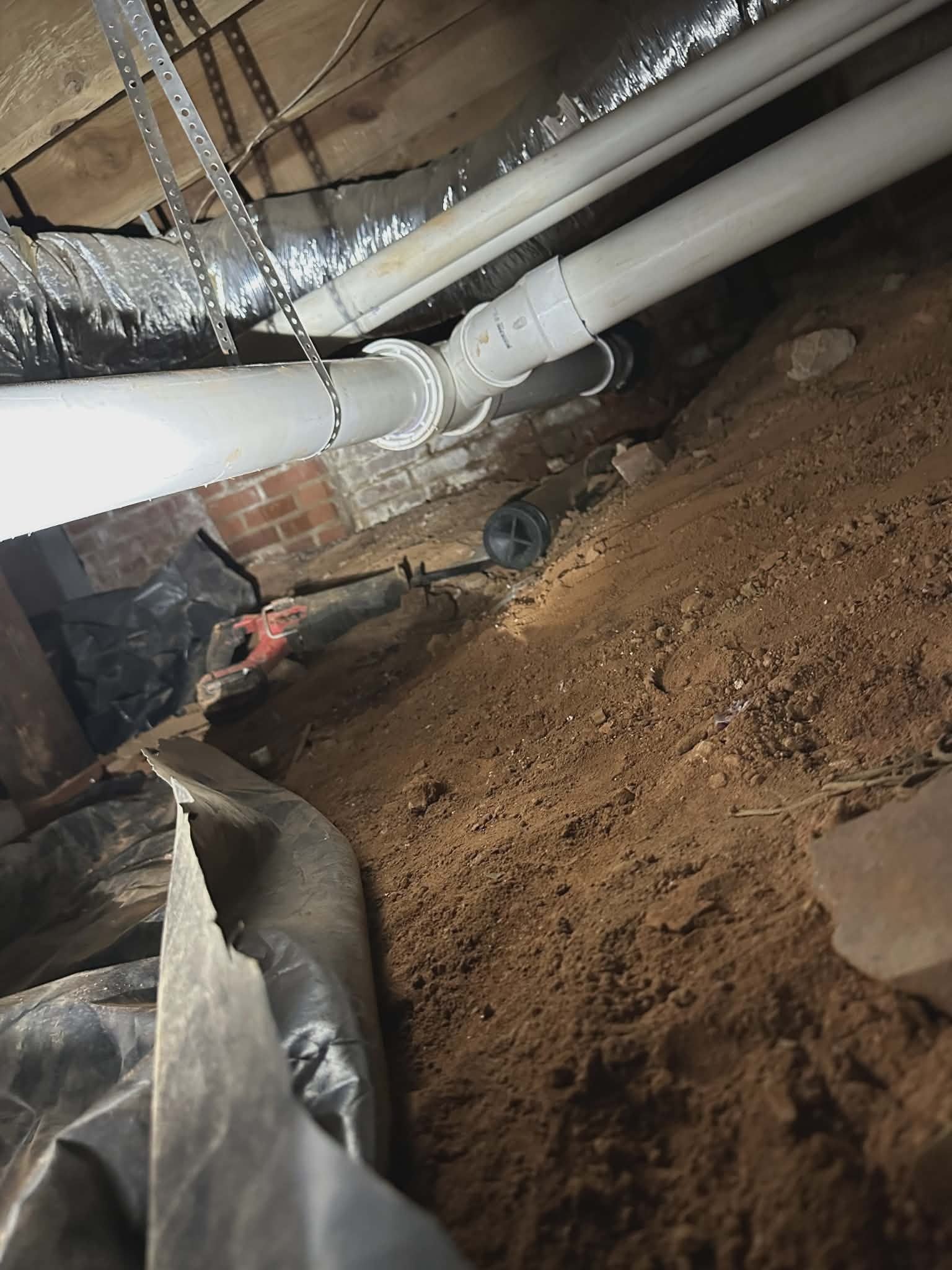
The Crawlspace Mistakes We See Most
The usual problem is not a bad pump. It is a pump that was never matched to the space it is protecting. We find units sized for a small basement pulling double duty in a much bigger crawlspace. Discharge lines dumping water right back toward the foundation instead of away from it. Float switches mounted so high the water rises too far before the pump ever kicks on.
We also keep running into systems with no backup power at all. A sump pump that only runs on the home's electrical is exactly the kind of setup that dies during the situation it exists for, because a storm strong enough to cut the power is usually strong enough to flood the crawlspace too.
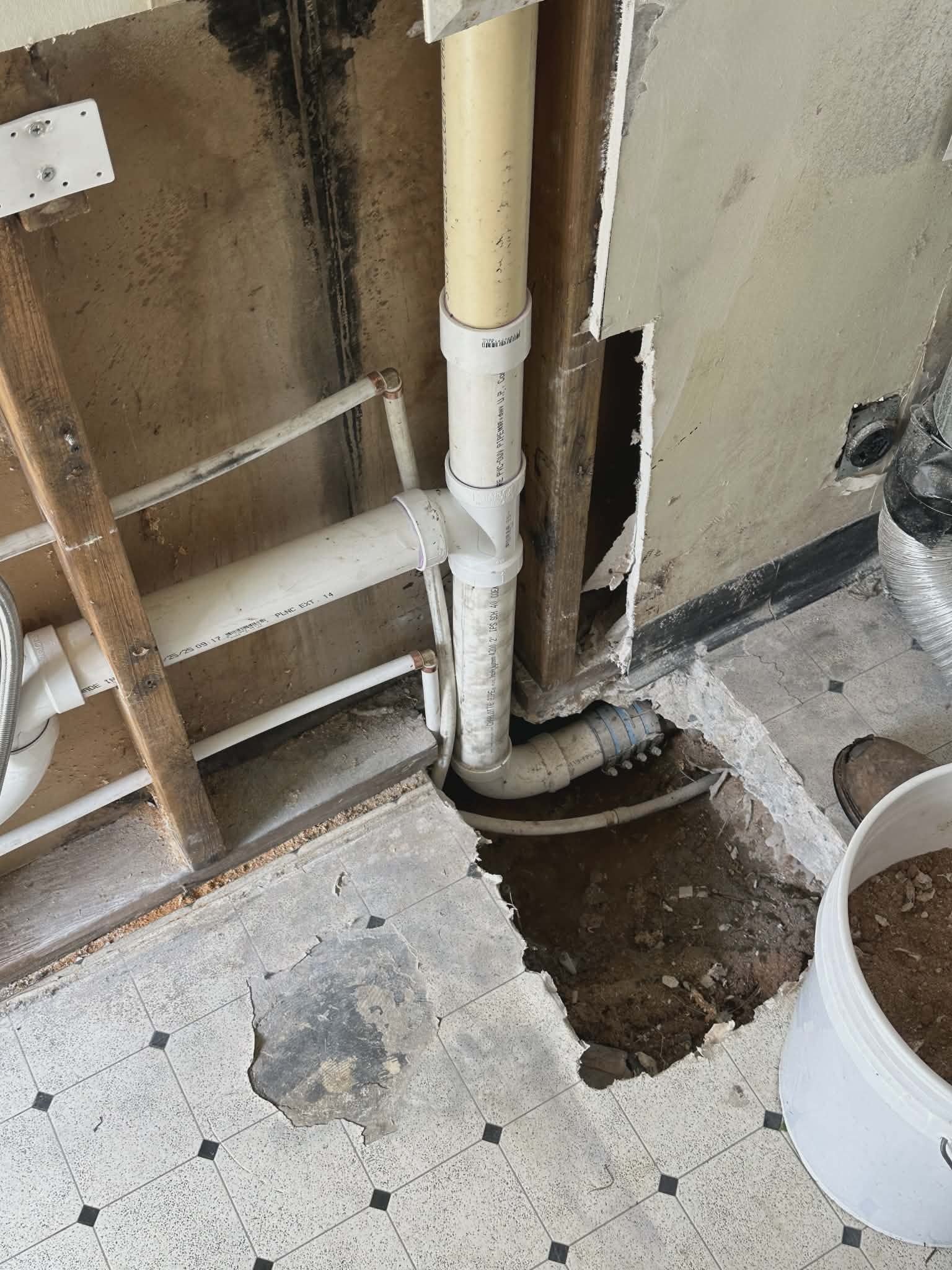
Why Maintenance Gets Skipped Until It Is Too Late
Plenty of homeowners never think about the sump pump until water is coming into the basement or crawlspace, and by then the pump has already failed. Now the conversation is not maintenance, it is water damage and mold remediation. A regular look can catch a failing float switch, a clogged discharge line, or a pump near the end of its life before any of that lands.
A working sump pump buys real peace of mind when the weather turns, but only if somebody checks on it before the weather turns. Pump making odd noises? Running constantly when it should not need to? Not kicking on when the water rises? That is the moment to call for service. Not after the next storm.
Protecting the Whole System, Not Just the Pump
A sump pump is one piece of a home's water management, not the whole thing. The discharge line has to carry water far enough from the foundation that it does not just drain back into the pit. A check valve keeps already-pumped water from sliding backward when the pump shuts off. And in a crawlspace, pairing the pump with a vapor barrier and decent drainage keeps the whole space dry instead of just emptying the pit after the fact.
When we install or service a sump pump, we look at the system as a whole, because a flawless pump on a bad discharge route still leaves you with a wet crawlspace. Getting all of it right is what actually keeps the space under your house dry through the next heavy season.
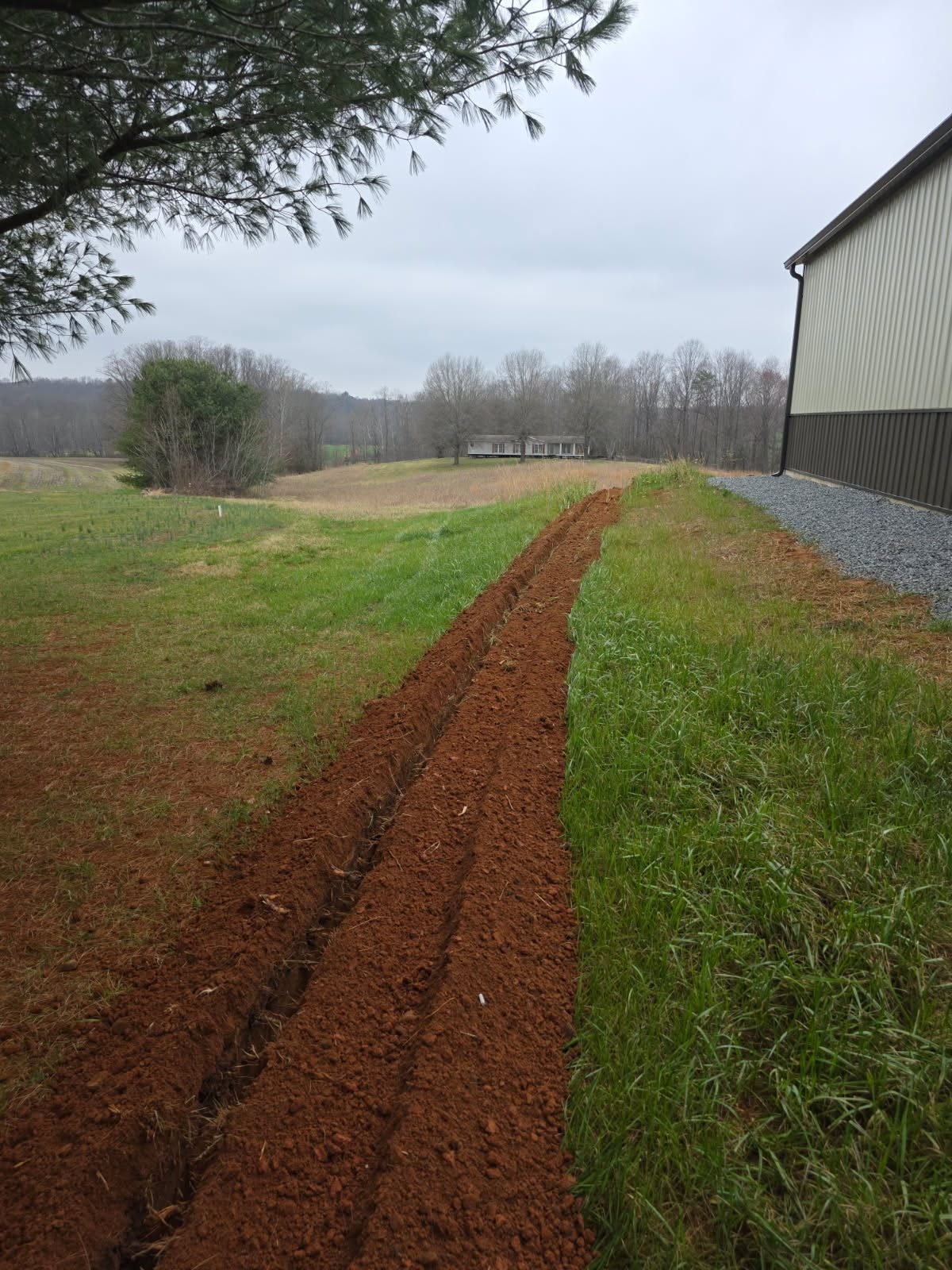
The mistake we usually find
We have replaced sump pump setups that were undersized for the crawlspace they were supposed to protect, with discharge lines that looped water right back toward the foundation instead of carrying it away from the house.
How we fix it
We size every sump pump and discharge line for the property's real water conditions, route the discharge well clear of the foundation, add a check valve, and run several test cycles before we call the install complete.
FAQ
Common Questions
Got an idea?
Got a topic you'd like a pro to cover? Tell us and we'll write for you.
Send the question that has been bugging you. If it is plumbing, we have probably fixed it, and we will turn the answer into a post.
Suggest a topicNeed this fixed, not just diagnosed?
Emergency Plumbing from a crew that documents the work and stands behind it with a warranty.