
Water Heater Died in a Cold Snap: Repair vs Replace in the NC Triad
November 4, 2026 · 14 min read
A cold snap hits the Triad, the shower turns cold, and the water heater gets blamed first. Sometimes that is correct. Sometimes the heater is fine and a frozen supply line, tripped breaker, interrupted gas supply, venting problem, or overloaded electrical element is keeping it from doing its job.
Cold weather can expose a weak part without being the direct cause of failure. Incoming groundwater is colder, households use more hot water, and equipment runs longer to recover. A heater that was barely keeping up in October may stop keeping up in January.
The right first step is diagnosis, not a replacement quote from the driveway. We check what failed, whether the tank itself is sound, how old the unit is, and whether the existing installation is safe and code-ready. Then we explain the cost and expected life of each reasonable option.
First, confirm whether the heater is the problem
Check more than one faucet. If both hot and cold water have stopped, the problem may be a frozen or interrupted main supply. If cold water flows normally but hot water does not, a frozen hot-side line or a closed valve may be involved. If hot water flows but stays cold, the heater or its energy supply needs attention.
For an electric unit, check the electrical panel once. A tripped breaker can explain the outage, but a breaker that trips again should remain off until the cause is found. Do not remove electrical covers or press a reset repeatedly.
For a gas unit, confirm whether other gas appliances operate. Do not attempt to relight equipment if you smell gas. Leave the area and call the gas utility or emergency service from a safe location.
Look around the base of the tank for water, rust trails, or damp flooring. Condensation can occur in cold weather, but standing water or a steady drip needs inspection.
What we test during a water heater diagnosis
We start with the fuel or power source, water supply, shutoff position, visible leaks, and the age and condition of the unit. Electric tanks may need element, thermostat, wiring, or breaker testing. Gas tanks may need burner, ignition, gas control, draft, and vent inspection.
We also look beyond the failed part. Venting, drain pan, shutoff access, expansion control, piping materials, and signs of prior overheating affect the recommendation. A cheap part does not make a repair worthwhile when the tank is leaking or the installation has several safety problems.
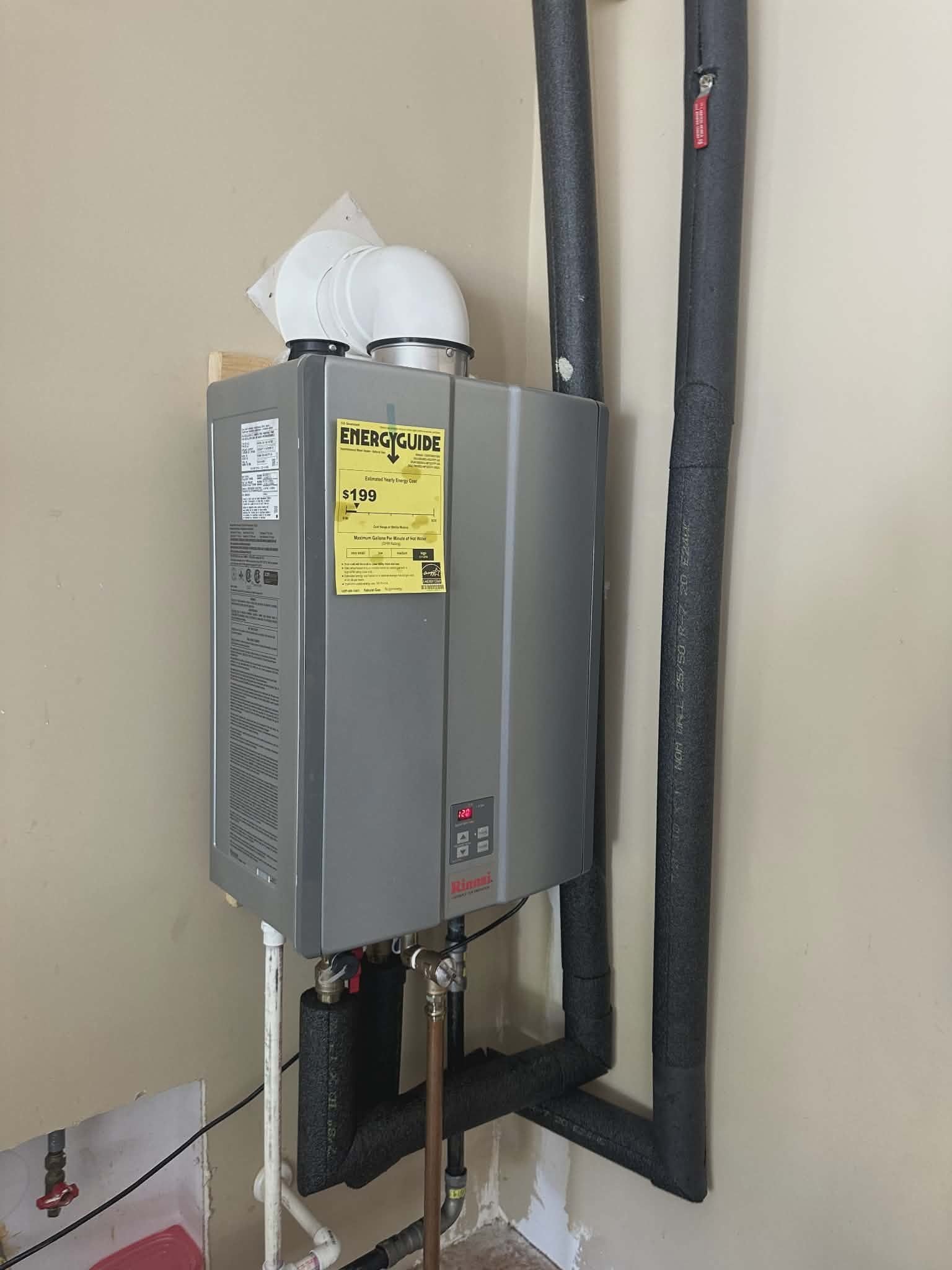
Tankless units store fault codes and have different service needs. Scale buildup, flow sensors, ignition parts, venting, filters, and freeze protection can all affect operation. We read the symptoms before assuming the heat exchanger has failed.

When repair makes financial sense
Repair is usually worth considering when the tank is dry, the unit is within a reasonable service life, the failed part is clear, and the rest of the installation is sound. A failed electric element, thermostat, igniter, thermocouple, or serviceable gas-control component does not automatically justify replacement.
The repair should also solve the actual complaint. A new element will not fix a tank that is undersized for the household. A new valve will not correct a venting problem. We separate the failed part from the system problem before recommending work.
Age is a guide, not the only decision. Maintenance, water quality, installation, and usage change how long a unit lasts. A younger neglected tank can be in worse condition than an older unit that was installed correctly and maintained.
When replacement is the better use of money
A leaking tank cannot be repaired in a lasting way. Once the steel vessel has failed, replacing an element or valve does not stop corrosion inside the tank. Shut the water off and plan for replacement.
Heavy rust, repeated repairs, scorched wiring, a damaged flue connection, or a unit near the end of its expected life can also make replacement the honest call. The question is not whether one more part can be installed. It is whether that repair buys enough safe, reliable service to justify the bill.
Household needs matter too. If the existing tank routinely runs out of hot water, replacing it with the same undersized unit repeats the problem. We review capacity, recovery rate, fuel type, available space, and actual hot-water use before sizing the replacement.

Published like-for-like replacement pricing
Our standard like-for-like tank replacement starts at $900 in the local zone and $1,050 in the extended zone. Parts, labor, installation, and haul-off of the old unit are included for a standard residential replacement.
Local pricing covers Yadkinville, East Bend, Jonesville, and Hamptonville. Extended pricing applies to areas 30 minutes or more from Yadkinville, including many Winston-Salem and Triad calls.
Like-for-like means the new unit fits the existing fuel type, capacity, location, and normal connection scope. A conversion, major vent correction, gas-line change, electrical upgrade, difficult attic removal, structural work, or other nonstandard condition requires an on-site quote. We explain that scope before work begins.
Cold-weather installation details that matter
A replacement is more than setting a new tank in the old spot. We verify the shutoff, connections, drain pan requirements, temperature and pressure relief discharge, venting, combustion air, and expansion control for the actual setup.
Thermal expansion occurs when water heats inside a closed plumbing system. Where required by the system and code, a correctly sized expansion tank helps absorb that pressure. It must be supported and connected correctly, not left hanging from a weak fitting.
On gas equipment, venting and draft deserve close attention during cold weather. Loose, undersized, damaged, or improperly sloped venting can create a safety problem. On electric equipment, wire size, breaker protection, and connection condition matter just as much as the tank.

Should you switch to tankless?
Tankless can provide long draws of hot water without storing a full tank, but it is not an automatic upgrade for every house. The unit must be sized for incoming water temperature and simultaneous fixtures. Gas models may need a larger gas line and new venting. Electric models can require substantial electrical capacity.
Water quality and maintenance matter. Mineral scale reduces heat-transfer efficiency and can damage a neglected unit. Service access and freeze protection matter too, especially for equipment placed on an exterior wall or in an unconditioned space.
A cold-snap failure is a reasonable time to compare options, but an emergency is not a reason to rush into an expensive conversion. We quote the tank replacement and tankless path separately when both make sense, then explain the installation differences.
What to do while you wait for service
If the tank is leaking, close the cold-water shutoff above the heater when it is safe to reach. Turn off power to an electric heater at the breaker. For a gas heater, use the appliance controls only when there is no gas odor and you understand the label instructions.
Do not operate an electric water heater with an empty tank. Do not cap or plug the temperature and pressure relief valve. Do not use an open flame to thaw nearby piping.
Clear a safe path to the unit and remove stored items from the immediate area. Find the model and serial label if accessible. That information, along with a description of the symptoms, helps us prepare for the call.
Call when the water stays cold
Burcham's Plumbing repairs and replaces tank and tankless water heaters across Yadkinville, Winston-Salem, Clemmons, Kernersville, Mocksville, and surrounding Triad towns.
Call 336.941.7579 if the tank is leaking, the breaker will not hold, the burner will not operate, or the house has no hot water. We diagnose first, explain repair and replacement options, and give clear pricing before work begins.
The mistake we usually find
Assuming every cold-weather outage needs a new heater, or spending money repairing a tank that is already leaking.
How we fix it
Confirm the heater is the cause, test the failed system, and compare the repair against the tank condition and expected remaining life.
FAQ
Common Questions
Got an idea?
Got a topic you'd like a pro to cover? Tell us and we'll write for you.
Send the question that has been bugging you. If it is plumbing, we have probably fixed it, and we will turn the answer into a post.
Suggest a topicNeed this fixed, not just diagnosed?
Water Heater Services from a crew that documents the work and stands behind it with a warranty.