
Frozen Pipes in Yadkin & Forsyth County: How to Prevent and What to Do
November 4, 2026 · 13 min read
A hard freeze in Yadkin or Forsyth County does not need to last for a week to cause trouble. One cold night can freeze water inside a pipe that runs through a vented crawl space, an exterior wall, an unheated garage, or the back of a cabinet. The first sign may be a faucet that only dribbles. The next sign may be water spreading under the floor after the ice begins to thaw.
A frozen pipe does not always leak while it is frozen. Ice can split copper, PEX fittings, valves, or an older section of pipe, while the ice itself temporarily blocks the opening. The leak often starts when water begins moving again. Restoring flow is not the end of the inspection.
This guide explains which pipes freeze first around Yadkinville and Winston-Salem, what to do before temperatures fall, how to respond safely when a line freezes, and when the problem needs an emergency plumber.
Why pipes freeze in the NC Triad
Our winters move above and below freezing instead of staying cold for months. That cycle can catch homeowners off guard. A house may stay comfortable while wind pushes freezing air through foundation vents, gaps around pipe penetrations, or an open garage door. The pipe is colder than the room where the thermostat sits.
Yadkin County has many homes over crawl spaces. Forsyth County has a mix of crawl spaces, basements, slab homes, additions, and older houses with plumbing added in stages. In both counties, the most exposed pipe run usually freezes first, not necessarily the oldest pipe in the house.
Insulation slows heat loss, but insulation does not create heat. A pipe wrapped in foam can still freeze when it sits in moving outside air long enough. Air sealing, steady indoor heat, and safe water movement work together.
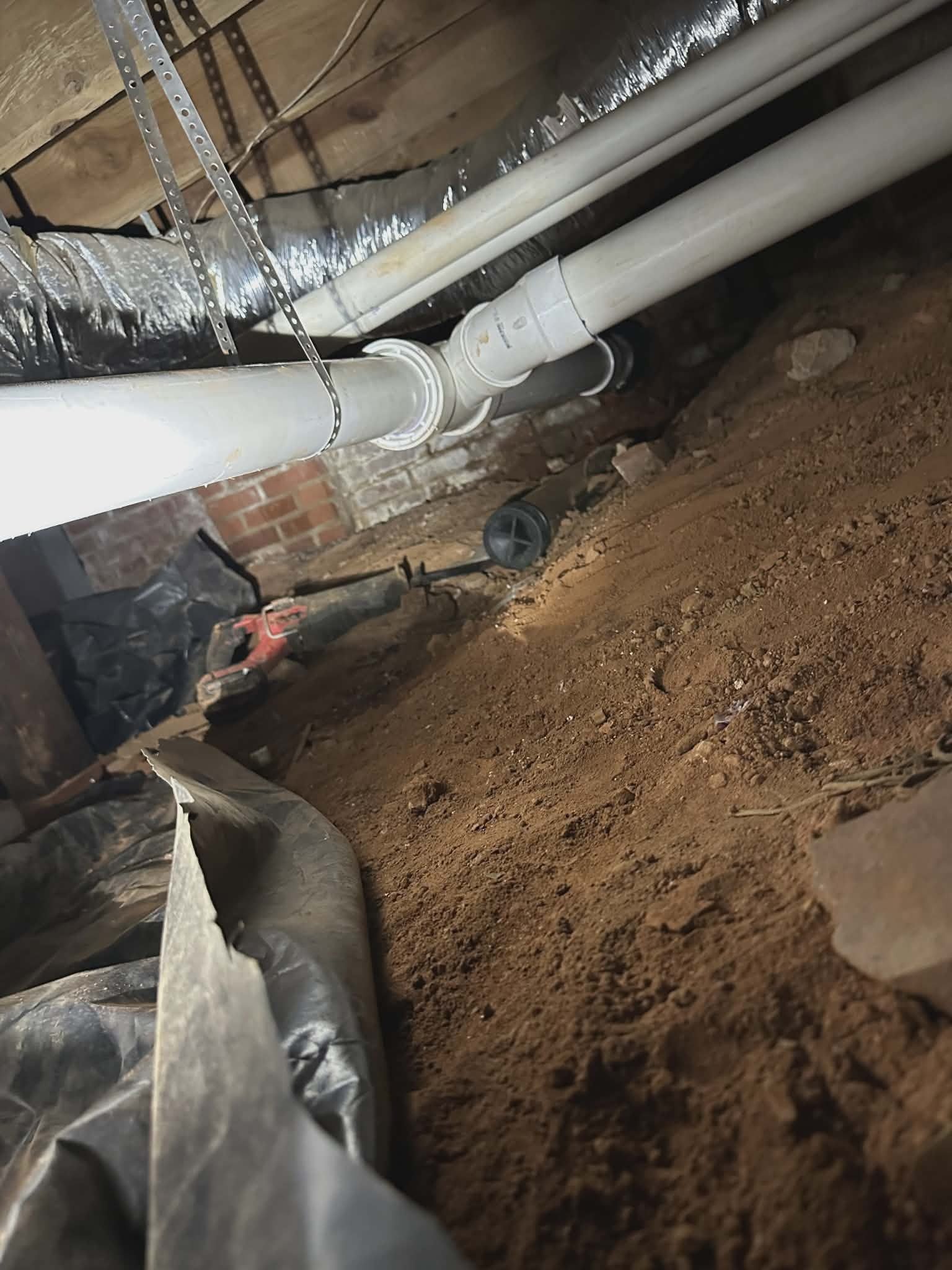
The pipes that usually freeze first
Outdoor hose bibs are common failure points, especially when a garden hose remains attached. Water can stay trapped inside the faucet body or the pipe behind it. A frost-free faucet also needs room to drain, so leaving a hose connected can defeat the design.
Kitchen and bathroom supply lines inside exterior walls are another common problem. The cabinet may feel warm at the front while the pipe behind it sits against cold sheathing. Laundry connections in garages, plumbing above unconditioned porches, and lines near crawl-space vents also deserve attention.
Vacant homes and rarely used rooms face extra risk. A thermostat set very low, a closed interior door, or a turned-off heat source can leave one plumbing zone much colder than the rest of the house.

Warning signs of a frozen line
No water at one faucet often points to a frozen branch line. Weak flow at several fixtures can indicate a larger frozen section, a pressure problem, or an issue at the well or main supply. Frost on an exposed pipe, a bulge, or an unusual smell from a faucet also deserves attention.
Listen as the house warms. Dripping inside a wall, water running when every fixture is closed, a well pump cycling more than normal, or a water meter moving with no water in use can signal a split line.
Do not assume a clog when a faucet suddenly loses flow during a freeze. Check whether hot water, cold water, or both are affected. That detail helps narrow down the frozen section.
Before the temperature drops
Disconnect garden hoses, cover vulnerable outdoor faucets, and close any interior shutoff that serves a hose bib when the plumbing is designed for it. Drain the short section after closing that valve. Do not close a valve unless you know what it controls.
Find the main water shutoff and make sure everyone in the house knows how to operate it. Clear stored items away from the valve. If the handle is stuck or corroded, address that before an emergency.
Open cabinet doors below sinks on exterior walls so room air can reach the plumbing. Keep interior doors open to rooms with plumbing. Maintain steady heat overnight instead of relying on a large morning temperature increase.
A slow drip can help on a known vulnerable line because moving water is harder to freeze. Use this as short-term protection during a severe cold night, not as a replacement for repairing gaps, missing insulation, or exposed pipe.
If the property will be vacant, do not simply turn the heat off. Keep the building heated, arrange for someone to check it, or have the plumbing properly winterized. Well houses, detached buildings, and outdoor kitchens need their own plan.

What to do when a faucet has no water
First, check several fixtures. Determine whether the problem affects one faucet, one side of the house, only hot water, only cold water, or the entire building. If the whole house has no water, confirm whether neighbors have service and whether a well system has power before assuming a frozen interior pipe.
If you see active water, hear spraying, or find a wet wall or ceiling, shut off the main water supply immediately. Turn off electrical power to a wet area only when you can do so safely from a dry location.
Leave the affected faucet open. If the frozen area is visible and accessible, apply gentle heat with warm towels, a hair dryer, or a portable heater positioned a safe distance away. Work from the faucet side toward the frozen area so melting water has a path out.
Never use a torch, open flame, propane heater, or high-temperature heat gun. These can start a fire, damage plastic pipe, weaken soldered joints, or create steam pressure inside a blocked section.
Do not crawl into a tight or unsafe area with electrical equipment. If the pipe is behind a wall, above a ceiling, near wiring, or deep in a crawl space, call a plumber rather than cutting blindly.
What to do if the pipe bursts
Shut off the main water valve. Open a low faucet and another fixture above it to relieve pressure and drain the system. Move belongings away from the water and use towels or containers only when the area is safe to enter.
If water is near an electrical panel, outlet, appliance, or standing-water hazard, stay out of the area. Call the appropriate emergency service or utility when electrical safety is uncertain.
Take clear photos of the affected area before cleanup when it is safe. A plumber needs access to the split pipe, so avoid covering the area or making a temporary repair that hides the failure. A clamp may slow some small leaks, but it is not a complete repair.
After the damaged section is repaired, the system should be restored slowly and checked under pressure. Nearby fittings can also be stressed by freezing, so watching one patch for a few seconds is not enough.
Check for damage after water starts flowing
Stay near the shutoff while the line thaws. Watch the water meter or well pressure, listen for running water, and inspect the crawl space, cabinets, walls, and ceiling below the frozen area.
A small split can spray only when pressure returns. Damp insulation, a new ceiling stain, a soft floor, or a pump that will not stop cycling can be the first clue. If anything looks wrong, shut the water back off and call.
The repair is not complete until the cause is addressed. That may mean insulating a supply line, sealing an air gap, relocating a pipe, repairing a crawl-space door, or replacing an outdoor faucet that cannot drain correctly.
How a plumber handles a freeze call
We start by confirming the affected fixtures and locating the coldest or most exposed part of the run. We check for active leaks before restoring pressure. If the line is hidden, we narrow the opening instead of removing more wall or flooring than the repair requires.
After replacing the damaged pipe or fitting, we restore water, test the repair, and inspect nearby connections. We also explain why that location froze and what can reduce the chance of another call during the next cold snap.
For Yadkinville, Winston-Salem, and surrounding Triad towns, call 336.941.7579 when you have no water, an active leak, or a frozen section you cannot reach safely. Burcham's Plumbing answers emergency calls 24/7.
The mistake we usually find
Applying an open flame to a frozen pipe, then walking away as soon as water starts flowing. The pipe may already be split, and the leak can begin only after the ice melts.
How we fix it
Use gentle heat only on a safe, accessible line. Stay near the main shutoff, restore pressure carefully, and inspect the full area for leaks before calling the problem solved.
FAQ
Common Questions

Got an idea?
Got a topic you'd like a pro to cover? Tell us and we'll write for you.
Send the question that has been bugging you. If it is plumbing, we have probably fixed it, and we will turn the answer into a post.
Suggest a topicNeed this fixed, not just diagnosed?
Emergency Plumbing from a crew that documents the work and stands behind it with a warranty.